

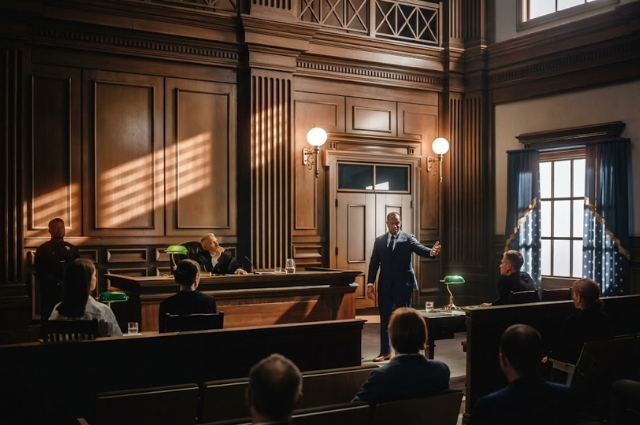
At LawFX, we believe attorneys deserve the truth about legal animation, not the myths that surround it. Too often, courtroom visuals are misunderstood as flashy videos or dismissed as inadmissible. The reality is far more powerful. Our legal animation services in Tulsa are built on scientific accuracy, deep technical expertise, and a genuine understanding of the courtroom. When done right, a legal animation is credible, defensible, and highly effective demonstrative evidence. In this article, we separate fact from fiction, explain what quality and effectiveness truly mean, and share the unique approach that sets our work apart.
The Truth About Legal Animation: Separating Facts From Assumptions
Legal animation is often misunderstood, and those misunderstandings can lead attorneys to overlook one of the most effective tools available for the courtroom. Some assume animations are little more than dramatizations, while others worry they will never survive an admissibility challenge. These assumptions rarely reflect reality. A properly built animation is a rigorous, evidence-based visual designed to clarify complex facts and help jurors understand exactly what happened during a disputed event.
The truth is that quality and effectiveness depend entirely on how an animation is created and by whom. A visual grounded in real evidence and built with technical precision behaves very differently from a generic video assembled without legal insight. At LawFX, we want attorneys to understand these distinctions, because knowing the truth helps you choose the right partner and use legal animation to its full strategic advantage in your case.
Common Myths About Legal Animation, and the Reality
Several persistent myths cause attorneys to underestimate legal animation. Understanding the reality behind each one reveals why a well-built animation is far more credible, admissible, and effective than many assume, and why the details of how it is made matter so much.
Myth: Legal Animations Are Just Dramatized Videos
In reality, our animations are never dramatizations or guesswork. Every frame is built directly from case evidence, including depositions, expert reports, engineering data, and physical records. Rather than embellishing events for effect, we recreate them accurately, so the animation serves as reliable demonstrative evidence that faithfully reflects the facts rather than a stylized interpretation of them.
Myth: Any Animator Can Create Courtroom Animations
Courtroom animation demands far more than artistic skill. It requires technical expertise, an understanding of evidence, and knowledge of the legal standards that govern admissibility. A generalist may produce an attractive video, but without that specialized foundation, the result can be challenged or excluded. Building defensible legal animation is a distinct discipline, not simply a creative exercise.
Myth: Legal Animations Aren’t Admissible in Court
When properly prepared, legal animations are generally admissible as demonstrative evidence used to illustrate testimony. Admissibility depends on accuracy, relevance, fair representation, and authentication by an expert. Federal Rule of Evidence 107, effective December 1, 2024, addresses illustrative aids directly, providing a clear framework courts use to admit carefully built visuals like ours during trial.
Myth: Animations Only Help at Trial
In truth, legal animations deliver value at every stage of a case. In mediation, they can encourage fair settlements, and in depositions, they clarify testimony and strengthen the record. Because a single accurate animation supports mediation, deposition, trial, and appeal, its usefulness extends far beyond the courtroom and throughout the entire life of the matter.
What Makes a Legal Animation Truly Effective
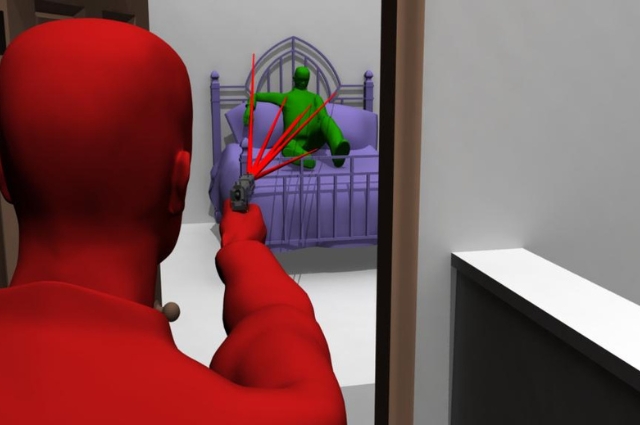
Effectiveness begins with comprehension. The greatest challenge in many trials is not the strength of the evidence, but the difficulty of explaining it to a jury. Technical reports, medical terminology, and engineering concepts can overwhelm jurors and leave room for doubt. An effective legal animation translates that complexity into something jurors can actually see, so understanding rises and the barrier between your evidence and the jury quickly falls away.
Persuasion follows understanding. Once jurors clearly grasp what happened, they can evaluate cause and effect, assess responsibility, and connect with your case theory on their own terms. Because our animations present the facts accurately rather than exaggerating them, that honest clarity builds trust, and trust is persuasive. An effective animation does not manipulate; it illuminates, helping your argument resonate with the jury long after the visual ends.
What Defines a High-Quality Legal Animation
Not all legal animations are created equal, and quality is what separates a powerful tool from a costly liability. Four defining markers distinguish a high-quality animation, and each one is built into every project we produce for Tulsa attorneys.
Grounded in Real Case Evidence
Quality starts with evidence. A strong animation is built entirely from real case data, including depositions, expert reports, engineering figures, medical records, and physical evidence. This foundation ensures the visual reflects what actually happened rather than assumption. When an animation is firmly grounded in the record, it becomes credible, defensible, and far more difficult for opposing counsel to challenge.
Scientific and Technical Accuracy
High-quality animations are scientifically and technically accurate. Recreating precise anatomy, physics, or equipment behavior requires careful research and close collaboration with your experts. The higher the fidelity, the more reliably the animation withstands scrutiny. This accuracy is what transforms a visual from a rough approximation into a trustworthy depiction that experts can confidently sponsor and defend on the stand.
Clarity and Persuasive Storytelling
Quality also depends on clarity. A strong animation guides the viewer logically through events, organizing timelines and key facts into compelling visual storytelling. Rather than overwhelming jurors with detail, it highlights what matters and makes it easy to follow. This clarity keeps the courtroom engaged and helps jurors retain the information central to your case theory throughout the trial.
Built to Meet Legal Standards
Finally, a high-quality animation is built to meet legal standards from the outset. It is designed to be accurate, relevant, fairly representative, and properly authenticated, so it can withstand admissibility challenges. By understanding the difference between demonstrative animations and simulations, we ensure each visual meets the appropriate evidentiary requirements rather than risking exclusion in court.
Our Unique Approach to Legal Animation
What makes our approach unique is the combination of technical depth and legal understanding behind every project. Our founder, Beau Brown, began creating 3D visuals in 1995 while working for a major drilling contractor, giving our team an authentic understanding of rigs, pipelines, heavy equipment, and physics. That engineering background lets us reconstruct even highly complex events with a level of accuracy that generalist providers rarely match.
Our approach is also evidence-first and deeply collaborative. We begin with a free consultation and a careful review of your evidence, then work closely with your attorneys and expert witnesses throughout production, verifying every detail against the record. Our work explaining the Deepwater Horizon blowout, featured by major national news outlets, reflects this same commitment to accuracy and clarity that we bring to every case in Tulsa.
The Technology and Techniques That Set Our Work Apart
The tools behind our animations play a major role in their quality. We combine advanced 3D modeling, laser scanning, and high-fidelity rendering to create visuals that are both accurate and compelling. For scene-based cases, laser scanning captures real environments with precise, measurable detail, while 3D modeling recreates equipment, anatomy, and mechanisms with technical fidelity. The result reflects reality rather than a loose approximation of it.
For collision and personal injury matters, we also produce immersive 3D and VR reconstructions that let viewers experience impact angles, forces, and sequences from multiple perspectives. These techniques do more than impress; they clarify. By pairing sophisticated technology with rigorous evidence, we create courtroom animation that is scientifically sound and genuinely persuasive, giving Tulsa attorneys a meaningful advantage when the facts are complex or hotly contested.
Legal Accuracy and Admissibility: The Truth About Visual Evidence
The truth about visual evidence is that admissibility is earned through accuracy and proper preparation. A legal animation is generally offered as demonstrative evidence to illustrate testimony, and it must be accurate, relevant, fairly representative, and authenticated by an expert. We build every project with these requirements in mind, and Federal Rule of Evidence 107, effective December 1, 2024, provides a clear framework for presenting illustrative aids in court.
It is also essential to understand the difference between an animation and a simulation. A simulation is generated through scientific computation and may be treated as substantive evidence subject to a higher bar under standards like Daubert or Frye. By recognizing this distinction, we help you choose the right approach and avoid pitfalls that can lead to exclusion. This legal fluency protects both your case and your investment.
Serving Tulsa Attorneys and Cases Nationwide
LawFX is proud to serve attorneys and law firms throughout Tulsa and across Oklahoma. As a trusted legal animation and litigation graphics studio, we support a wide range of matters, from personal injury and wrongful death to oil and gas disputes, medical malpractice, criminal cases, product liability, and complex commercial litigation. Whatever your practice area, we bring the same truth-driven standards of quality and accuracy to every project.
Our reach extends well beyond Tulsa. With a presence in both Tulsa and Houston, we support cases nationwide, bringing the same accuracy, technology, and courtroom focus wherever your litigation leads. Because we collaborate closely with legal teams remotely and provide trial support on-site or virtually, distance never compromises the quality of our work. Wherever your case is heard, our legal animations are built to perform.
Frequently Asked Questions About Legal Animation in Tulsa
Here are honest answers to some of the questions Tulsa attorneys ask us most often about the quality and effectiveness of legal animation.
Are legal animations really effective in court?
Yes. When built accurately, legal animations dramatically improve jury comprehension and persuasion by turning complex evidence into a clear, moving picture. Jurors understand and retain visual information far better than words alone, which is why a well-crafted animation often becomes a turning point in a case.
What separates a high-quality legal animation from a poor one?
Quality comes down to four things: grounding in real evidence, scientific and technical accuracy, clear and persuasive storytelling, and construction that meets legal standards. A poor animation lacks these foundations, leaving it vulnerable to challenge, exclusion, or damage to your credibility in court.
Are legal animations considered real evidence?
Most legal animations are demonstrative evidence, meaning they illustrate testimony rather than serve as independent proof. A simulation, generated through scientific computation, can be substantive evidence subject to a higher bar. We help you determine which your case requires and build it accordingly.
Can any animation studio create courtroom-ready animations?
No. Courtroom-ready animation requires technical expertise, evidence-based methods, and an understanding of admissibility standards that many studios lack. Without this specialized foundation, an animation may look polished but fail under scrutiny. Building defensible legal animation is a distinct discipline that demands both accuracy and legal insight.
How do you keep your animations accurate and unbiased?
We build every animation directly from case evidence and collaborate closely with your experts throughout production, verifying each detail against the record. Because we recreate events rather than dramatize them, our animations faithfully represent the facts, keeping them accurate, defensible, and free from misleading embellishment.
How do we get started with LawFX in Tulsa?
Getting started is simple. We begin with a free consultation to review your case, discuss your goals, and provide a custom quote. From there, we handle storyboarding, development, and trial support, guiding you through every step so your animation is ready when you need it.
Conclusion: The Truth Behind Our Legal Animation Services in Tulsa
The truth about legal animation is that quality, effectiveness, and approach make all the difference. At LawFX, we build animations grounded in real evidence, refined with technical accuracy, and designed to meet the standards of the courtroom. From forensic reconstructions to trial graphics, our unique, evidence-first approach helps Tulsa attorneys present complex cases with clarity and confidence. Ready to see the difference the truth makes? Contact us today to schedule your free consultation and discover what our team can do.