
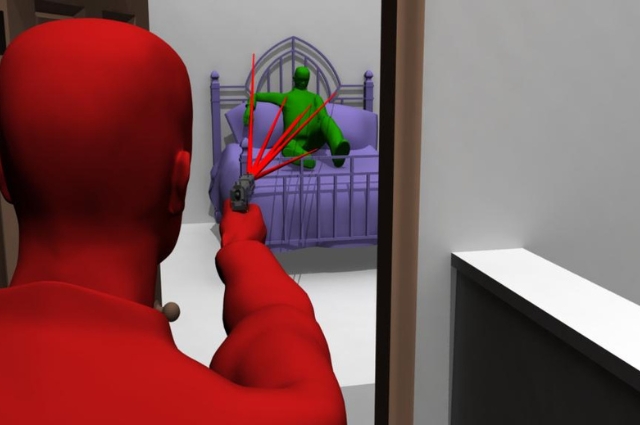
At LawFX, every legal animation follows a clear, disciplined path from concept to courtroom. Our legal animation process is collaborative, evidence-first, and designed to produce visuals that are accurate, defensible, and ready to present at trial. From the first consultation to real-time trial support, we work closely with your legal team and experts at every stage. Understanding how this process works helps you know exactly what to expect and why our animations hold up under scrutiny. In this guide, we walk you step by step through how we turn complex evidence into a compelling courtroom presentation.
From Concept to Courtroom: How Our Legal Animation Process Works
Creating a legal animation is far more involved than producing a simple video. It is a careful, structured process that begins with your evidence and ends with a polished visual presented in the courtroom. Along the way, we analyze the facts, plan the narrative, build accurate 3D models, verify every detail with your experts, and prepare the finished animation for trial. Each step builds on the last to ensure accuracy and clarity.
This journey from concept to courtroom is intentional. Rather than rushing to a finished product, we take the time to get the facts right and align the animation with your case strategy. At LawFX, our legal animation process reflects both our technical expertise and our understanding of the courtroom, so the visual you present is not only compelling, but also credible, defensible, and firmly grounded in the evidence of your case.
Why a Structured Process Matters
A structured process is what separates a reliable legal animation from a risky one. When each step is grounded in evidence and reviewed for accuracy, the finished visual is far more likely to withstand challenges and support your case. A rushed or careless approach, by contrast, can produce an animation that looks polished but crumbles under scrutiny, potentially harming your credibility with the judge and jury when it matters most.
Our process also protects admissibility. Because we build every animation to be accurate, relevant, and properly authenticated, we reduce the risk of exclusion and give your visual the best chance of being admitted as demonstrative evidence. This discipline is why attorneys trust us with complex, high-stakes cases. A strong process is not just about efficiency; it is about producing courtroom animation you can rely on when it counts.
Our Step-by-Step Legal Animation Process
Our legal animation process unfolds in six clear steps, each designed to ensure accuracy, collaboration, and courtroom readiness. Together, they guide your project from the first review of the evidence all the way to a confident presentation at trial.
Step 1 — Case Analysis & Consultation
Every project begins with a free consultation and a thorough review of your case. We examine depositions, expert reports, engineering data, and physical evidence to understand the facts, the disputed issues, and your goals. This foundational step ensures the animation we propose is accurate, relevant, and strategically aligned with how you intend to present your case in court.
Step 2 — Storyboarding & Conceptualization
Next, we translate the evidence into a clear visual plan. Through detailed storyboarding, we map out scenes, camera angles, and sequences before any final production begins. This step lets you and your experts review the intended narrative early, confirm technical accuracy, and refine the approach, so the finished animation tells the right story clearly and defensibly.
Step 3 — 3D Design & Development
With the storyboard approved, our team builds the animation using accurate 3D modeling, physics, and high-fidelity rendering. We recreate equipment, anatomy, vehicles, and environments with careful technical detail, ensuring each element reflects reality. This development stage brings the storyboard to life, transforming the approved plan into a precise, realistic visual grounded firmly in the evidence.
Step 4 — Expert Collaboration & Verification
Throughout development, we collaborate closely with your attorneys and expert witnesses. We incorporate their feedback and verify every detail against the evidence, ensuring the animation remains faithful to the facts and consistent with expert testimony. This ongoing verification is essential, because it keeps the visual accurate, defensible, and ready to be sponsored and authenticated by your experts in court.
Step 5 — Review & Finalization
Before trial, we finalize the animation and prepare it for presentation. We address any disclosure or admissibility considerations with your team and make final refinements so the visual is polished and courtroom-ready. This careful review ensures nothing is overlooked and that the finished animation meets both your strategic goals and the legal standards required for admissibility.
Step 6 — Courtroom Presentation & Trial Support
Finally, when your case reaches the courtroom, we provide real-time trial support, on-site or remote, so your visuals run flawlessly. From managing playback to making last-minute adjustments, we stand beside your team throughout the proceedings. From deposition to verdict, we help you present your evidence with the confidence and control your case deserves.
The Evidence and Information We Work From
An accurate animation is only as strong as the evidence behind it. That is why our process depends on the materials you provide. We work from depositions, expert reports, engineering data, medical records, and physical evidence, using each source to reconstruct events faithfully. The more complete the information, the more precisely we can depict what happened, which is why gathering the right materials early is so important to the outcome.
We understand that every case is different, and not all evidence arrives at once. Our team works with you to identify what is available, what is still needed, and how each piece informs the animation. By grounding every scene in verifiable data rather than assumption, we ensure the finished visual reflects reality. This evidence-first foundation is what makes our courtroom animation credible and defensible under scrutiny.
How We Ensure Accuracy and Admissibility Throughout
Accuracy and admissibility are not afterthoughts in our process; they guide every step. A legal animation is generally offered as demonstrative evidence to illustrate testimony, and its admissibility depends on accuracy, relevance, fair representation, and proper authentication by an expert. We build each project with these requirements in mind, and Federal Rule of Evidence 107, effective December 1, 2024, provides a clear framework for presenting illustrative aids in court.
We also understand the important difference between an animation and a simulation. A simulation is generated through scientific computation and may be treated as substantive evidence subject to a higher bar under standards like Daubert or Frye. By recognizing this distinction early, we help you choose the right approach for your case and avoid pitfalls that could lead to exclusion. This attention to legal standards protects your case at every stage.
The Tools and Techniques We Use at Each Stage
Behind every step of our process is a set of advanced tools that make accuracy possible. We combine several techniques throughout production, each suited to a specific need, to ensure the finished animation is both precise and compelling for the courtroom.
3D Modeling
3D modeling is at the heart of our work. We recreate equipment, anatomy, vehicles, and environments with careful technical detail, building accurate digital representations of the people, objects, and spaces involved in your case. This precise modeling forms the foundation for every animation, ensuring that what jurors see reflects the real world rather than a rough approximation.
Laser Scanning
For scene-based cases, laser scanning lets us capture real environments with precise, measurable detail. By scanning a location, we create an accurate digital replica that preserves distances, positions, and spatial relationships. This technique is invaluable for crime scenes and accident sites, where exact measurements and sightlines can be central to demonstrating how an event actually unfolded.
3D & VR Reconstruction
For collision and personal injury matters, we produce immersive 3D and VR reconstructions that let viewers experience an event from multiple perspectives. These reconstructions reveal impact angles, forces, and the full sequence of events, helping jurors understand causation and consequences far more clearly than testimony alone could ever convey in the courtroom.
High-Fidelity Rendering
High-fidelity rendering brings each animation to life with clarity and realism. This final visual layer transforms our accurate 3D models into polished, professional depictions that hold attention and communicate complex information effectively. Quality rendering ensures the finished animation looks credible and precise, reinforcing the professionalism of your entire presentation when it is shown to the jury.
Where the Finished Animation Makes an Impact
Once the process is complete, the finished animation delivers value well beyond the trial itself. In mediation, a clear visual can reframe the conversation, helping opposing parties and insurers understand your position and encouraging fair, timely settlements. Rather than debating interpretations of dense reports, everyone works from the same accurate account of events, which can move negotiations forward and resolve disputes more efficiently before a trial ever begins.
Depositions benefit as well. Presenting an animation while questioning a witness can clarify testimony, expose inconsistencies, and lock in a clear record. And when a case does reach trial, that same visual anchors your presentation from opening to closing. Because our process produces a single, accurate animation that supports mediation, deposition, trial, and appeal, its impact continues throughout the entire life of your case.
Serving Tulsa Attorneys and Cases Nationwide
LawFX is proud to serve attorneys and law firms throughout Tulsa and across Oklahoma. As a trusted legal animation and litigation graphics studio, we apply this same careful process to a wide range of matters, from personal injury and wrongful death to oil and gas disputes, medical malpractice, criminal cases, product liability, and complex commercial litigation. Whatever your practice area, our process delivers accurate, courtroom-ready results.
Our reach extends well beyond Tulsa. With a presence in both Tulsa and Houston, we support cases nationwide, bringing the same process, accuracy, and courtroom focus wherever your litigation leads. Because we collaborate closely with legal teams remotely and provide trial support on-site or virtually, distance never disrupts our workflow. Wherever your case is heard, our legal animation process delivers the same reliable results.
Frequently Asked Questions About Our Legal Animation Process
Here are answers to some of the questions Tulsa attorneys ask us most often about our legal animation process and what to expect at each stage.
How long does the legal animation process take?
Timelines depend on your case’s complexity, the number of scenes, and the level of detail required. After reviewing your evidence during the consultation, we provide a realistic schedule. We also work to accommodate trial dates and deadlines whenever possible, keeping you informed at every step.
What do you need from us to get started?
We begin with your available evidence, including depositions, expert reports, engineering data, medical records, and physical records. During the consultation, we identify what is on hand and what is still needed, then guide you through gathering the materials that will make your animation accurate.
How involved are our experts in the process?
Very involved. We collaborate closely with your expert witnesses throughout development, incorporating their feedback and verifying every detail against the evidence. This ensures the animation aligns with their testimony and can be confidently sponsored and authenticated in court, which is essential for both accuracy and admissibility.
Can we review the animation before it’s finalized?
Absolutely. Review is built into our process. You and your experts examine the storyboard early and provide feedback throughout development. Before trial, we finalize the animation together, making refinements so the visual is accurate, polished, and fully aligned with your strategy before it is ever presented.
Do you support us during trial as well?
Yes. We provide real-time trial support, on-site or remote, so your visuals run smoothly when it matters most. From managing playback to handling last-minute adjustments, we stand beside your team throughout the proceedings, helping you present your evidence with confidence and control.
How do we get started with LawFX in Tulsa?
Getting started is simple. We begin with a free consultation to review your case, discuss your goals, and provide a custom quote. From there, we guide you through storyboarding, development, and trial support, handling every step so your animation is ready when you need it.
Conclusion: From Concept to Courtroom with LawFX
From concept to courtroom, our legal animation process is built to deliver accuracy, clarity, and confidence at every step. At LawFX, we guide your project through consultation, storyboarding, development, expert verification, finalization, and trial support, ensuring the finished visual is credible, defensible, and courtroom-ready. This disciplined approach is why Tulsa attorneys trust us with their most important cases. Ready to begin your next project? Contact us today to schedule your free consultation and see our process in action.